What an AI Memory App Should Actually Do (and Why I Built One for My Mom)
Blog Post · Written by David Usher · September 13, 2026 · Updated September 16, 2026
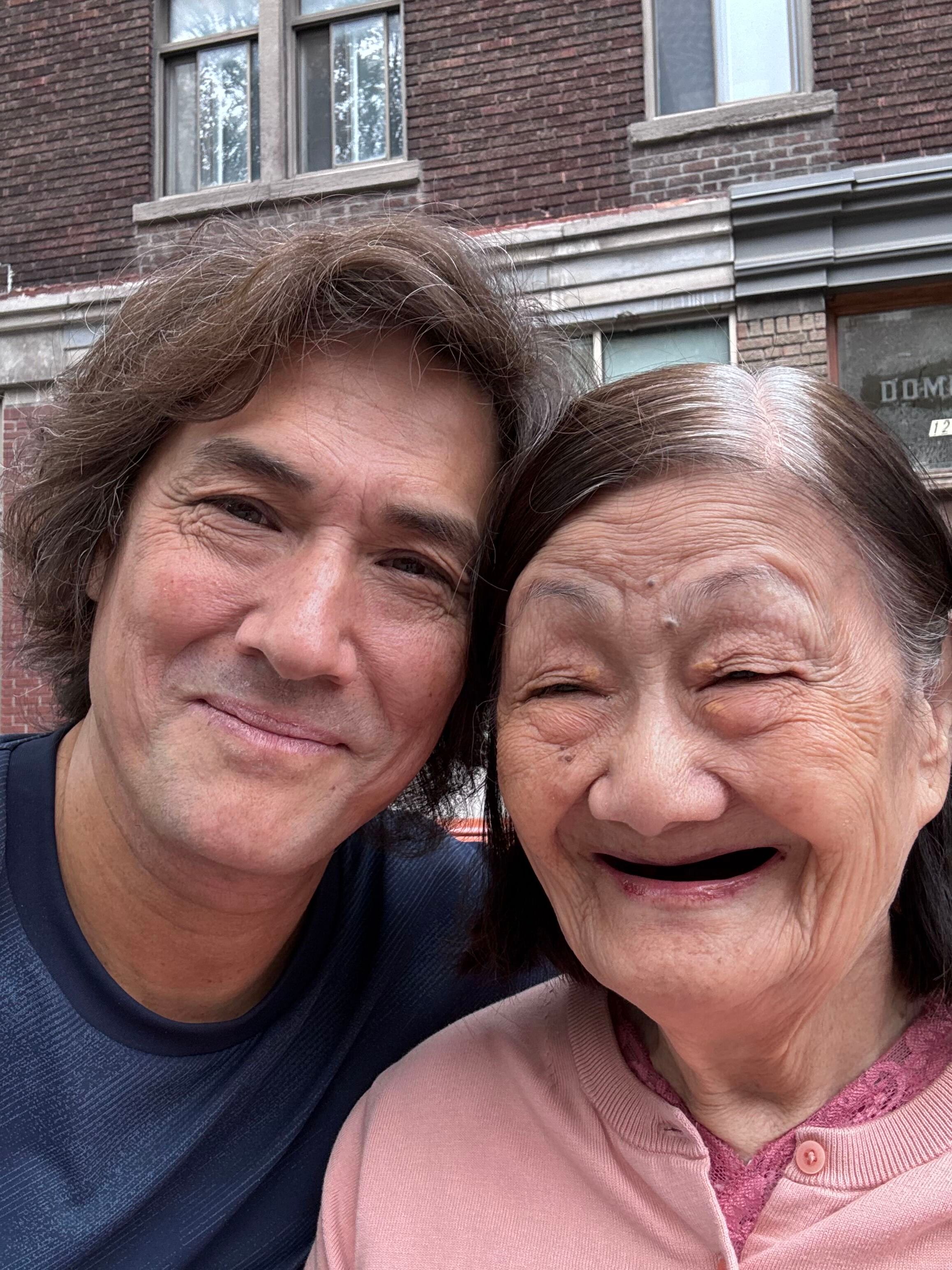
An AI memory app for family stories should do more than record what you say and file it away. It should interview you the way a good biographer would, follow your memory wherever it goes, keep your photographs beside the stories that explain them, let you find any memory again later, and leave the story in your own voice. That is the short version. The long version starts with my mother.
I became obsessed with memory because of my mom.
She has Alzheimer's, and watching someone you love slowly lose access to parts of their own story changes the way you think about memory very quickly. You start realizing that a life does not disappear all at once. It disappears in pieces. A name goes missing, then a place, then the context around a photograph, then a story you assumed you would always be able to ask about later.
That was one of the reasons we built SecondEcho. I started asking a very simple question: if artificial intelligence can now generate text, images, music and video, surely we should also be able to use it to help preserve the stories of a life before they disappear. But the more we built, the more obvious it became that an AI memory app should do much more than store recordings or generate polished paragraphs. It should help you remember more deeply, organize what you save, and give you better ways to understand the shape of your own life.
What Is an AI Memory App for Family Stories?
An AI memory app for family stories is a tool that helps you record, organize, explore and preserve memories using artificial intelligence. The good ones make it easy to capture stories by voice or text, attach photographs, find memories later, connect people and events across time, and turn a collection of fragments into something that feels like a life rather than a folder full of files.
That sounds simple, but there is a big difference between storing memories and understanding them. Most of us already have enormous archives. We have thousands of photos on our phones, emails going back decades, old videos, text messages, notes and recordings. The problem is not that we lack information. The problem is that almost none of it understands the context around the information. A photograph can show you what happened. It usually cannot tell you why it mattered.
That is where AI starts to become interesting.
The Most Important Feature Is Not Transcription. It Is the Biographer.
A lot of AI memory apps focus on transcription, tagging and organization. Those things are useful, but I do not think they are the most important part. For me, the most important part is the AI biographer.
A good biographer does not simply ask a list of questions and wait for answers. A good biographer listens for the interesting parts. They notice when you mention someone repeatedly but never really explain who they were. They hear when you skim over a moment that probably meant more than you initially said. They ask the follow-up question that makes you stop and think about something in a way you have not thought about it before.
That is what we designed Chloe to do inside SecondEcho. Chloe is not meant to be your friend. She is meant to be your biographer. Her job is to help you go deeper, bring out the parts you might otherwise skip over, and help you fill in the spaces around a memory without trying to take over the story. David Usher has written about what separates an AI biographer from a companion, so I will not repeat his argument here.
Why a Good AI Biographer Matters
Most of us are not particularly good interviewers of ourselves. We tell ourselves the same version of our own stories over and over again, and after a while the outline becomes fixed. We remember the headline, but not always the detail underneath it.
A biographer can interrupt that pattern. You might tell a story about moving to New York, and Chloe might ask what you were leaving behind. You might talk about your first job and mention your father three times without realizing it, and she may ask what your relationship with him was like at that point in your life. You might describe something as a small event, but the way you talk about it suggests it mattered much more than you are admitting.
That kind of conversation can bring out memories and meaning that would never appear if you were simply answering a static list of prompts. AI is not creating the memory. It is helping you explore it.
A Memory App Should Let You Record in Fragments
One of the things I dislike about traditional memoir systems is that they often assume you are going to tell your life in order. Human memory does not work like that.
You remember fragments. A song reminds you of a room. The room reminds you of a friend. The friend reminds you of a trip. Suddenly you are 30 years away from the story you originally started telling, and that is completely normal.
So a good memory app should not force you through a rigid sequence of questions. You should be able to record a fragment and stop. You should be able to come back later. You should be able to jump from childhood to yesterday and back again without worrying about where everything belongs.
The AI should do more of the organizational work in the background so that you can concentrate on remembering. Chloe follows you wherever the memory goes instead of asking you to follow a script.
AI Should Enhance Creativity, Not Replace It
This is one of the things I care about most with SecondEcho. Artificial intelligence is supposed to be a tool that helps us improve what we already do. It should not flatten everybody into the same voice or take over the creative process.
We have been preserving memories in similar ways for generations through journals, photographs, recordings and books. Those things still matter. AI gives us new tools, but the objective should not be to replace those things. It should be to make them more useful and to give people more ways to work with their own stories.
With SecondEcho, you can use what Chloe writes exactly as it is. You can make small corrections or rewrite whole sections yourself. Or you can ignore the writing altogether, download everything you have told her, and use it as raw material for something entirely your own.
Some people want help shaping their stories. Some people love writing and only need help remembering. Some people just want an organized archive that they can return to later. All of those approaches are valid, and the application should adapt to you.
Your Story Should Still Sound Like You
One of the biggest risks with generative AI is sameness. AI is very good at producing something polished, and sometimes it is too good at smoothing everything out.
Life stories should not all sound like the same memoir. The strange details are important. The contradictions are important. Your sense of humour matters. The things you obsess over and the things you barely mention are part of what makes the story yours.
If artificial intelligence removes all of that and turns everybody's memories into generic, beautiful prose, then I think it has failed. AI should help you preserve your voice, not erase it.
Voice Is Probably the Easiest Way to Start
A blank page is intimidating. Talking is much easier.
That is why voice is such an important part of a good AI memory app. You can simply press a button and start talking. You do not have to decide whether something deserves to be a chapter or whether your grammar is right or whether the story is important enough.
You just tell it.
Once the memory is captured, AI can transcribe it, organize it and help you explore it further. The hard part is getting the memory out before it disappears.
Photos Need Stories
Most of us already have thousands of photographs, but photographs without context are incomplete memories.
You might have a picture of your father standing beside a car in 1972. You know it is your father and you may know what the car was, but will your children know why the photograph mattered? Will they know who took it, where he was going, who he was dating, or why he talked about that car for the rest of his life?
Probably not, unless someone records the story.
A good AI memory app should allow photographs to live beside the memories that explain them. The story gives the picture meaning, and the picture often helps unlock another story. That relationship between image and context is one of the most important parts of preserving a life.
Search Becomes More Important as the Archive Grows
At the beginning, a memory archive might contain ten stories and everything is easy to find. Then there are 100. Then 500. At that point, the ability to search by meaning becomes incredibly important.
You should be able to look for memories about your father, Montreal, your first job, difficult years, a particular friend, or a period of your life without having to remember exactly what you called the story when you recorded it.
This is another place where artificial intelligence can make a memory archive much more useful than a folder full of recordings. The archive should become more valuable as it grows, not harder to use.
A Book Is Important, But It Should Not Be the End
I still believe deeply in physical books. There is something about holding a life story in your hands that a screen cannot completely replace. That is why SecondEcho can turn your memories and photographs into a full-colour hardcover book.
But the book should not be the end of the memory. A book freezes the story at a particular moment. Your archive should keep growing. You might remember something next year that belongs in a chapter you created today. You might find another photograph. You might correct something or tell a completely different version of a story after thinking about it more deeply.
The archive stays alive. The book is one beautiful output from it.
What Should You Look for in an AI Memory App?
If I were choosing an AI memory app today, I would look beyond the feature list. I would ask whether the AI actually understands biography or whether it simply transcribes recordings. I would ask whether it can follow the way memory really works, through fragments and associations, rather than forcing me through a questionnaire.
I would also want to know whether I can edit everything, whether my photographs can live alongside the stories, whether I can search the archive easily, and whether the system becomes more useful as I add more memories. Just as importantly, I would want to know whether I can ignore the AI completely when I want to and use the app as a creative tool rather than a system that tries to make every decision for me.
And I would look very carefully at privacy and ownership. A memory archive is incredibly personal. You should understand what happens to your stories, who owns them, how they are protected, and what the company is allowed to do with them. We answer those questions for SecondEcho in our FAQ, and I think every company in this space should answer them just as plainly.
Trust is not just another feature here. It is the foundation.
How This Differs From the Services You May Already Know
It is worth saying plainly that the older ways of doing this work well for some people. StoryWorth emails your parent one question a week for a year and binds the written answers into a book. If your mother or father enjoys writing and will keep that weekly appointment, it is a good product. Remento records the answers out loud and prints a book with codes that play back the original voice, which is exactly right for a family that wants the sound of a voice preserved above everything else.
SecondEcho is built for a different person: someone who would rather talk than write, who does not want to wait for next week's question, and who wants a biographer asking the next question rather than a list of prompts. If you are weighing those options, I compared them more fully in my piece on StoryWorth alternatives, including where each one is the better fit.
Why We Built SecondEcho
At Reimagine AI, we had spent years building artificial intelligence systems and thinking about the interface between people and AI. My mom's Alzheimer's made memory feel much more personal.
I kept thinking that there had to be a better way to save a life.
That became SecondEcho.
SecondEcho lets you record memories by voice or text, add photographs, work with Chloe as your biographer, search your archive, correct anything she gets wrong, and turn your memories into a life story or a printed hardcover book. But the core idea is much simpler. AI should help you remember more deeply and preserve more of what matters, while leaving you completely in control of the story.
That is what I think an AI memory app should do.
Frequently Asked Questions
What should an AI memory app for family stories include?
Look for easy voice capture, an AI biographer that asks meaningful follow-up questions, search that works by meaning, a place for photographs beside the stories that explain them, the freedom to edit or ignore what the AI writes, clear answers on privacy and ownership, and long-term access to your archive. SecondEcho was designed around all of those.
Can AI help preserve family memories?
Yes. AI can help transcribe stories, connect related memories, organize people and events, search a growing archive and ask follow-up questions that help bring out more detail. It cannot recover a memory that is completely gone, but it can help preserve and explore memories while they are still accessible.
Can an AI memory app write my memoir?
It can help, but it does not have to write it for you. With SecondEcho, you can use what Chloe writes, edit it any way you want, or simply use your saved memories as source material and write something completely new yourself.
Is an AI biographer the same as a chatbot?
Not really. A chatbot is designed for general conversation. An AI biographer should understand biography, memory and follow-up interviewing. Its job is to help uncover the details and context that make a life story meaningful, rather than simply carrying on a conversation.
Can I turn my memories into a physical book?
Yes. SecondEcho can turn your stories and photographs into a full-color hardcover book, while your digital memory archive continues to exist and grow.
When should I start recording family memories?
Earlier than you think. One of the hardest lessons from watching my mom develop Alzheimer's was realizing that there were questions I wished I had asked while the answers were still available. You do not need a diagnosis or a crisis to start preserving a life story. If you want a practical place to begin, we wrote a guide to recording a parent's life story.